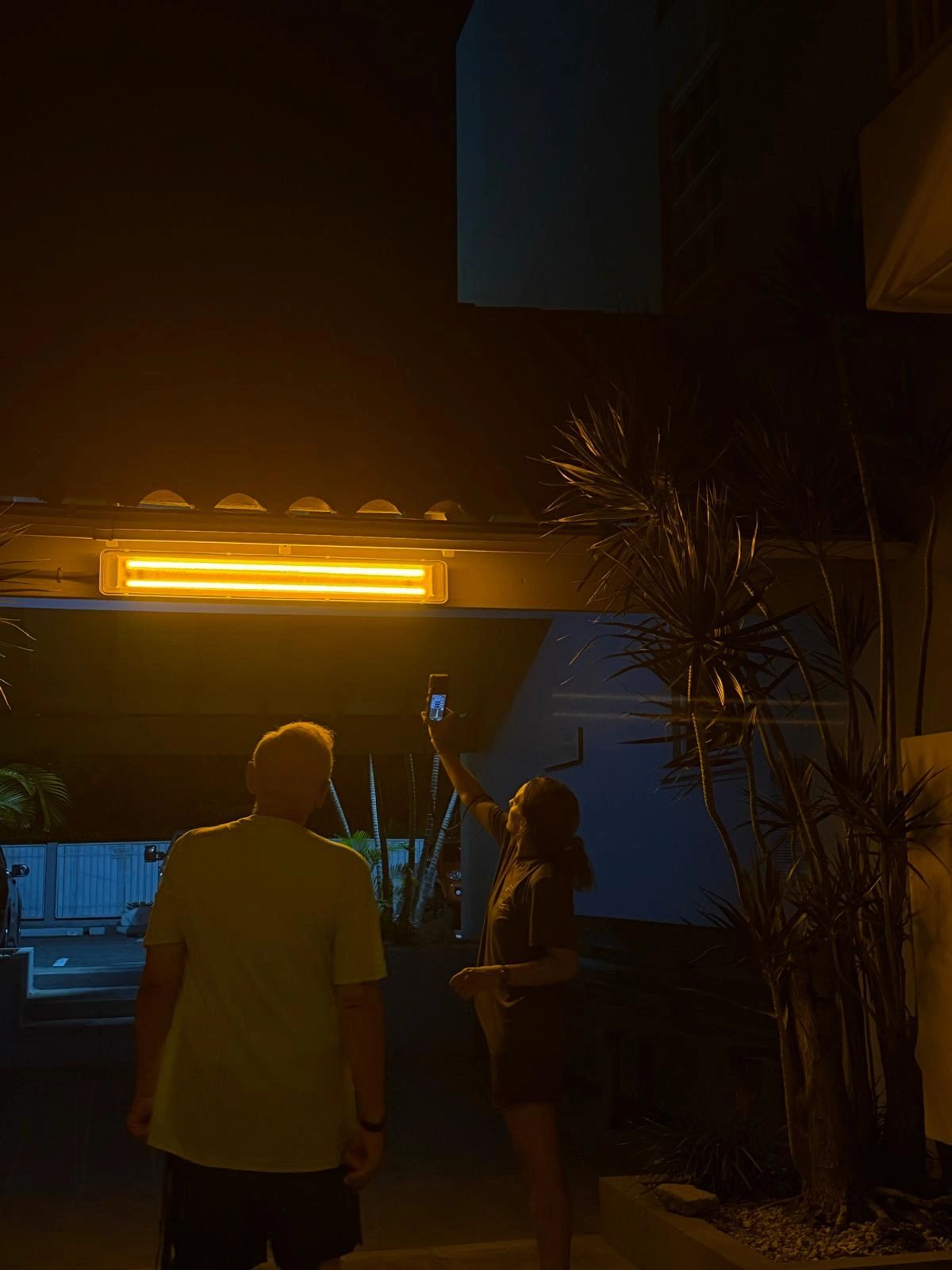
Light pollution has wide-ranging impacts on human health, the economy, and wildlife. Excessive artificial lighting disrupts natural sleep cycles, contributing to health issues such as insomnia, stress, and increased risk of chronic conditions. Economically, inefficient and unnecessary lighting leads to higher energy consumption, increased public and private costs, and wasted resources. Reducing light pollution improves public health, lowers energy expenses, and supports more sustainable and resilient communities.
Artificial lighting poses a serious threat to sea turtles by disrupting critical nesting and hatchling behaviors. Bright coastal lights disorient hatchlings, causing them to move inland instead of toward the ocean, which increases exhaustion, dehydration, and predation. Artificial light can also deter adult females from nesting or alter nest site selection, reducing reproductive success. Reducing light pollution is essential to protecting nesting beaches, maintaining natural orientation cues, and ensuring the long-term survival of these endangered species.
In Puerto Rico, light pollution is one of the most significant threats to nesting sea turtles and hatchlings. Light Pollution Law #218 establishes standards to reduce the impacts of artificial lighting on ecologically sensitive habitats.
The Puerto Rico Lighting Retrofit Program, led by Urbanativa, plays a key role in restoring natural darkness at nesting beaches while supporting compliance with local regulations.
If your property is located next to an ecologically sensitive area—such as a sea turtle nesting beach, bioluminescent bay, or other critical habitat—you may be eligible to participate in this program.

Please reach us at cont.luminica@gmail.com if you cannot find an answer to your question.
The Lighting Retrofit Program helps property owners upgrade or modify outdoor lighting to reduce light pollution and protect sensitive coastal ecosystems in Puerto Rico, including sea turtle nesting beaches, bioluminescent bays, and other critical wildlife habitats.
Property owners, businesses, nonprofits, and public facilities located near ecologically sensitive areas in Puerto Rico may be eligible. This includes properties located close to:
Eligible properties may include:
Common wildlife-friendly lighting upgrades include:
Artificial lighting near beaches can disorient wildlife, especially sea turtles. Hatchling sea turtles naturally move toward the brightest horizon over the ocean. Artificial lights from buildings and streets can cause them to move inland instead, reducing their chances of survival.
Participation costs may vary based on the Program’s available funding and the project size. Some participants may receive full or partial lighting equipment, technical guidance, and a customized Lighting Retrofit Plan to help implement recommended upgrades.
If the Program is not funded, the availability and scope of services will depend on the roles of Urbanativa in project planning, lighting design, equipment purchasing, site installation, technical advice, and other related support services.
Property owners or property administrators are generally responsible for installation costs. Some exceptions may apply depending on the specific project and available program support.
Program staff will review your property location during the application process to determine whether it falls within an eligible conservation area.
Program staff may conduct a lighting assessment to evaluate existing fixtures and recommend appropriate wildlife-friendly lighting upgrades.
Apply online or download and complete the form "Solicitud" in the Resources section and send it to cont.luminica@gmail.com
Copyright © 2026 Urbanativa - All Rights Reserved.
Photo credits: 7 Quillas, DNER, ATMAR, Chelonia